
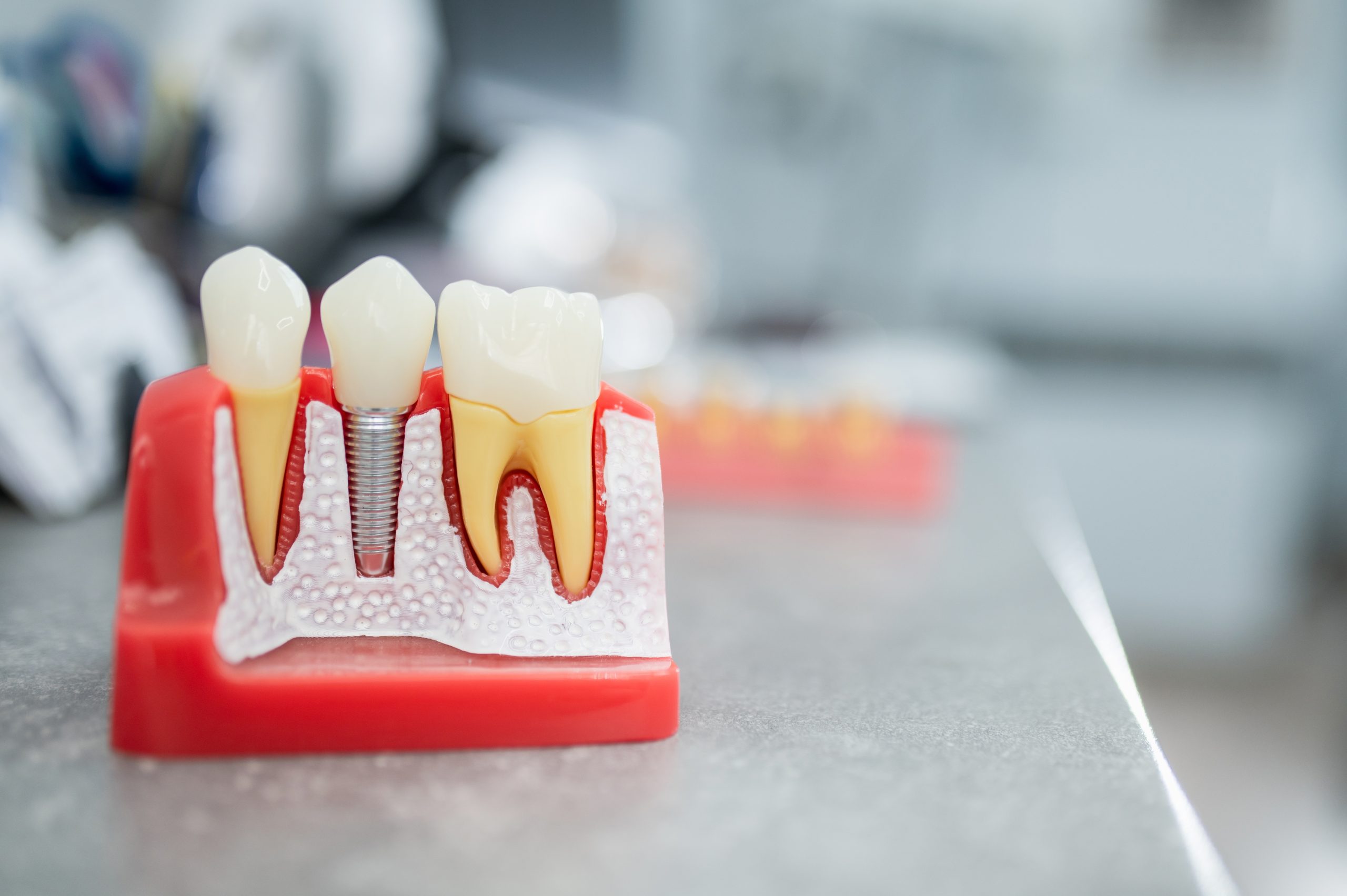
If you’re researching dental implants in Buffalo or Williamsville, NY, you may have come across two options: mini dental implants and standard dental implants. While both are designed to replace missing teeth, they are not interchangeable.
In most cases, standard dental implants are the better long-term choice for replacing missing teeth because they are designed to properly support a full-sized crown and withstand normal chewing forces.
A simple principle guides implant dentistry:
Tooth-sized crowns need tooth-sized implants.
Understanding the difference between these two options can help you make the best decision for your long-term oral health.
What is a standard dental implant?
A standard dental implant is a titanium post that replaces the root of a missing tooth. It is placed in the jawbone and acts as a stable foundation for a custom crown designed to look and function like a natural tooth.
Standard implants are typically 3.5–5 mm in diameter, which closely matches the size of natural tooth roots. This allows them to support normal biting forces and provide long-term stability.
Patients in Buffalo and Williamsville often choose standard dental implants because they offer:
- Strong support for full-sized crowns
- Excellent long-term durability
- Natural appearance and function
- High success rates when properly planned and placed
For most patients, standard implants are considered the gold standard for replacing missing teeth.
What are mini dental implants?
Mini dental implants are much narrower than traditional implants, usually less than 3 mm in diameter.
They were originally developed for situations where space is extremely limited or when stabilizing dentures.
Mini implants may sometimes be used for:
- Denture retention
- Temporary anchorage during treatment
- Replacing very small teeth in certain cases
However, because they are significantly smaller, mini implants may not provide the same strength and stability needed to support most adult teeth.
Why Implant Size Matters
When replacing a tooth, the implant functions as the foundation of the restoration. Just like a building requires a strong foundation, a replacement tooth requires an implant that can properly support it.
Back teeth—such as premolars and molars—experience significant chewing forces. Placing a full-sized crown on a very narrow implant can concentrate those forces on a small structure.
This can increase the risk of:
- Implant fracture
- Implant loosening
- Long-term restoration complications
For this reason, many implant dentists follow a simple rule:
A crown that replaces a full-sized tooth should be supported by a full-sized implant.
When Mini Dental Implants Can Be Appropriate
Mini implants do have a place in dentistry, but their use is typically limited to specific situations.
For example, they may be appropriate for lower front teeth, which are naturally smaller and experience lower biting forces.
Mini implants are also commonly used to help stabilize dentures, especially when patients want a less invasive option.
However, for most other teeth—particularly those that do the majority of chewing—standard dental implants generally provide a more predictable long-term solution.
Dental Implant Planning in Williamsville and Buffalo
Successful dental implant treatment involves careful planning. Modern implant dentistry uses digital imaging and treatment planning to determine the ideal implant size and position for each patient.
When planning implants, dentists evaluate:
- The size of the missing tooth
- The amount and quality of bone available
- The patient’s bite and chewing forces
- Long-term durability of the restoration
This comprehensive approach helps ensure the implant functions comfortably and lasts for many years.
Choosing the Right Implant Option
If you are considering dental implants in Buffalo or Williamsville, it’s important to choose a treatment plan that prioritizes long-term success.
While mini dental implants may be appropriate in certain situations, most teeth are best restored with standard dental implants designed to support a full-sized crown and withstand everyday chewing forces.
A thorough evaluation allows your dentist to recommend the implant option that will provide the best function, stability, and esthetic result for your smile.
Frequently Asked Questions About Dental Implants
Are mini dental implants as strong as regular implants?
Mini implants are significantly smaller than standard implants. While they can be useful in specific situations, they generally do not provide the same strength and support as standard implants for replacing most adult teeth.
Are mini dental implants cheaper?
Mini implants can sometimes cost less initially, but treatment decisions should focus on long-term success and durability, not just the upfront cost.
Are dental implants worth it?
Dental implants are widely considered the most reliable and natural-feeling option for replacing missing teeth, restoring both function and appearance.