Technology
At Erin Sweeney DDS PLLC, modern dental care starts with the right tools. Dr. Erin Sweeney, DDS believes that precision and comfort go hand in hand, and that means investing in technology that makes your treatment faster, more accurate, and more comfortable from the very first visit. Every step of your care is supported by equipment designed to give you the best possible outcome with as little guesswork as possible, whether you’re coming in for a routine checkup or a full smile transformation.
Understanding Dental Technology
Dental technology refers to the advanced instruments, imaging systems, and digital tools that dental professionals use to diagnose, plan, and carry out treatment. Over the past decade, these tools have dramatically changed what’s possible in the dental chair, pinpointing decay that’s invisible to the naked eye and producing restorations that fit with remarkable precision. The result is care that’s more personalized, more predictable, and far less reliant on trial and error. Technology doesn’t replace the skill and judgment of your dentist; it sharpens it.
Dental Technology We Use
Every tool in our practice is chosen with a clear purpose: to support better care for you. Here’s a look at the technology available at our practice and what each one brings to your treatment.
CBCT for Guided Implant Cases and Diagnosis
Cone Beam Computed Tomography (CBCT) creates a full three-dimensional image of your teeth, bone, nerves, and soft tissue in a single, fast scan. Unlike traditional flat X-rays, CBCT gives Dr. Sweeney a complete picture of your oral anatomy, which is especially critical for implant planning, TMJ assessment, and evaluating impacted teeth. The scan takes less than a minute, is completely painless, and uses significantly less radiation than a standard medical CT.
Laser Dentistry
Dental lasers allow for highly precise treatment of both gum tissue and tooth structure without the discomfort of traditional instruments. Common uses include treating gum disease, reshaping uneven gum lines, addressing early-stage cavities, and supporting faster healing after soft tissue procedures. Patients often experience less bleeding, less swelling, and a reduced need for anesthesia, making procedures feel far less intimidating.
Exocad Digital Design Software
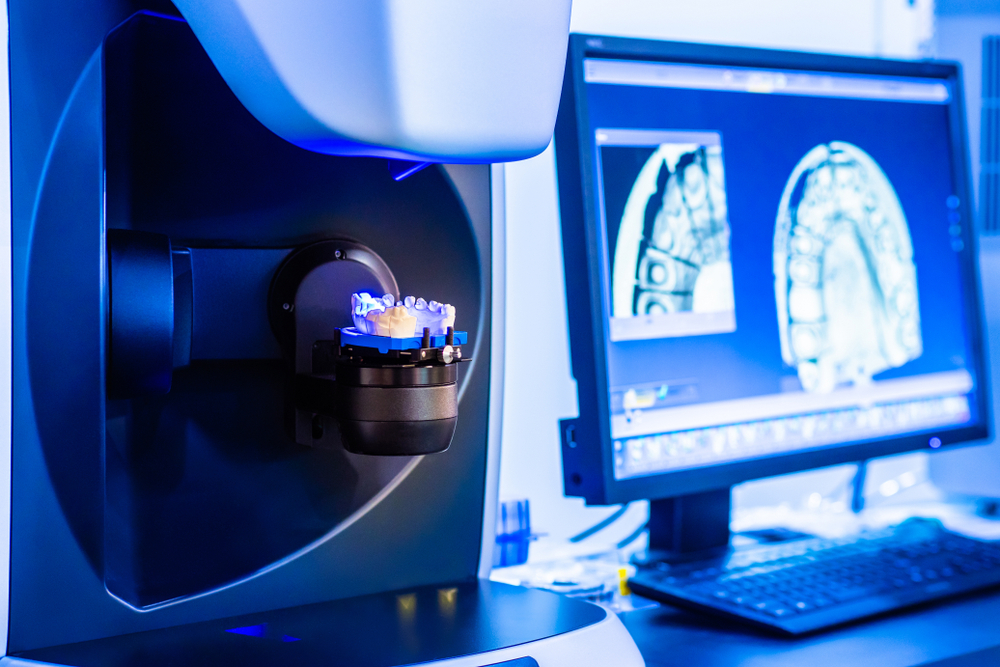
Exocad is a professional-grade CAD (computer-aided design) software used to digitally design crowns, veneers, bridges, and other restorations with a high level of accuracy. Rather than relying solely on physical impressions, digital design allows for restorations that are planned and refined on screen before they’re ever fabricated. This translates to a better fit, a more natural appearance, and fewer adjustments once your restoration is placed.
Sprintray 3D Printing
Sprintray is an in-practice 3D printing system that allows certain dental appliances and restorations to be fabricated quickly and precisely on-site. Surgical guides, temporary crowns, and night guards can all be produced with fewer outside lab steps, reducing the time between diagnosis and delivery. That streamlined process means faster turnaround and tighter quality control throughout your treatment.
iTero Lumina and NIRI Technology
The iTero Lumina is a digital intraoral scanner that captures detailed 3D images of your teeth and gums without the need for traditional impressions. Built-in Near-InfraRed Imaging (NIRI) technology goes a step further by detecting interproximal cavities that standard X-rays can miss, without any additional radiation. Together, these tools make exams more thorough and allow for earlier intervention before small issues become larger ones.
Digital X-Rays and Intraoral Photos
Digital X-rays produce high-resolution images of your teeth and bone with a fraction of the radiation used by traditional film X-rays. Intraoral photos capture close-up images of specific areas inside your mouth, making it easy for Dr. Sweeney to show you exactly what she’s seeing and walk you through your options clearly. Both tools support faster, more informed decisions and give you a direct view of your own oral health.
Our Comprehensive Approach Using Dental Technology
Why Choose Us for Dental Services Backed By Technology
Investing in a dental practice that prioritizes current technology isn’t just about convenience; it’s about the quality and accuracy of the care you receive. At Erin Sweeney DDS PLLC, every tool in our practice reflects Dr. Sweeney’s commitment to evidence-based, thorough dentistry, from CBCT-guided implant planning to chairside digital design.
What sets our practice apart isn’t just the equipment; it’s how it’s used. Dr. Erin Sweeney, DDS brings a meticulous eye for detail and a genuine focus on your individual needs to every appointment. You won’t feel like a number here. You’ll feel like someone who’s being heard, well cared for, and treated with the full depth of what modern dentistry can offer.
Modern Technology, Precision, and Comfort Built Around Your Smile
The right technology doesn’t just make dentistry easier; it makes your results more reliable and your experience more comfortable. Precise diagnosis, thoughtful treatment planning by Dr. Erin Sweeney, DDS, and efficient in-practice fabrication all work together to give you care you can count on.
Our team at Erin Sweeney DDS PLLC are ready to put these tools to work for your smile. Book your visit by calling 716.631.9554. Before you come in, check out our Instagram for a closer look at the smiles we’ve had the privilege of creating. Already been in? We’d love to hear about your experience; drop us a review and help others find us on Google Maps.
FAQs
What is dental technology?
Dental technology refers to the digital tools, imaging systems, software, and fabrication equipment used by dental professionals to diagnose conditions, plan treatment, and carry out procedures. These tools range from digital X-rays and intraoral scanners to 3D printing systems and laser instruments. Together, they support more accurate diagnoses, more precise treatment, and a better overall experience for patients.
What is the latest dental technology?
Some of the most advanced tools available today include cone beam CT (CBCT) scanners, intraoral scanners with near-infrared imaging, chairside CAD design software, and in-practice 3D printing. These innovations have significantly reduced turnaround times, improved the fit and function of restorations, and made it possible to detect problems earlier and treat them with greater accuracy. Practices that invest in these tools are better equipped to deliver consistent, high-quality outcomes.
How has technology changed dental hygiene?
Technology has made it far easier to detect issues like early-stage cavities, gum inflammation, and bone loss before they progress. Digital X-rays and intraoral imaging give patients a clearer view of their oral health, which often encourages stronger home care routines. Catching problems early means less invasive treatment, and that’s always a win for your long-term health.
How do dental clinics stay up-to-date with technology?
Dental clinics stay current through continuing education, professional association memberships, and direct investment in equipment that has been clinically validated. Dentists like Dr. Sweeney who pursue advanced training, such as coursework through institutions like the Kois Center, are often among the first to adopt evidence-backed innovations. Ongoing evaluation of available tools helps ensure patients always have access to effective, current options.
How do dental offices use technology to improve patient outcomes?
Technology strengthens outcomes by increasing diagnostic accuracy and treatment precision at every stage of care. Tools like CBCT allow our dentists to plan complex procedures using detailed anatomical data, while design software ensures restorations meet exact specifications before placement. The outcome is fewer complications, better-fitting work, and results patients can rely on for years to come.